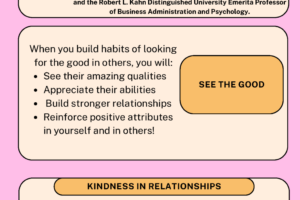

June 2026 – Meaningful Connections
By Abigale Pierce
People often take for granted the relationships they have with others. These connections form the foundation of many aspects of daily life, influencing how we interact, communicate, and navigate the world around us. However, genuine and intentional relationships also have a profound connection to mental health.
An important concept to understand when discussing this topic is connection. “Connection is the sense of belonging and mutual support that develops through meaningful relationships, allowing individuals to feel valued, understood, and accepted.” But how can we cultivate these meaningful connections?
According to research from students at Stanford University, “Positive human connection plays an important role in maintaining our emotional-physical health, well-being, and growth. Whether it be with friends, your peers, or a significant other, relationships often allow us to forge deep and meaningful bonds that can result in a sense of purpose, great joy, and satisfaction,” (Yisrael). Human beings are naturally social, and meaningful relationships are essential to emotional well-being. When individuals are deprived of positive social interaction, they often experience loneliness and isolation. However, not every interaction contributes positively to mental health. The American Psychiatric Association emphasizes this reality, stating, “Difficult or negative social interactions, on the other hand, may have harmful effects on mental health.” Experiences of loneliness and persistent negative interactions can have significant emotional and physical consequences, contributing to unhealthy thought patterns and declining mental well-being.
Fortunately, there are many ways to build healthy relationships and foster meaningful connections. Effective communication plays a vital role in supporting mental health by helping individuals feel heard, understood, and valued. Even simple acts of listening with empathy and responding with compassion can strengthen relationships and improve emotional well-being. Feeling genuinely seen and supported can significantly reduce emotional distress and promote resilience.
Within the context of communication, trusted adults have an especially powerful influence on the mental health of children and teenagers. In a theory called Napkin Talk – Web Of Support, Derek Peterson highlights the importance of every young person having access to multiple trusted adults. He explains, “The rule of five, it says that every child needs at least five current adults in their life.” This principle encourages children and adolescents to develop a diverse support system that provides guidance, encouragement, and stability throughout their development. Peterson further states, “Every kid needs at least five, and it doesn’t matter who those five are, what mostly matters is the level of connectedness they have to the child or teenager.” Rather than focusing on who fills these roles, the quality and strength of those relationships are what have the greatest impact on a young person’s emotional and mental well-being.
This responsibility does not belong solely to adults. Each of us has the ability to become a source of support for the people around us. How can we be the foundation someone may need when life becomes difficult?
So, I’ll leave you with this question: What will you do to help?
Will you be more genuine in the relationships you already have? Will you look outward instead of inward? Will you simply be someone who listens? Will you reach out when you need support?
Every meaningful connection has the power to make a difference. The support we give, and the support we are willing to accept, can change the course of someone’s life.
Works Cited
https://www.psychiatry.org/news-room/apa-blogs/social-connections-key-to-maintaining-mental-well.
https://pmc.ncbi.nlm.nih.gov/articles/PMC12393497/.
Valadez, Lisa. “Just Five Adults… — Indiana Center for the Prevention of Youth Abuse & Suicide.” Indiana Center for the Prevention of Youth Abuse & Suicide, https://www.indianaprevention.org/blog-1/20220225-justfiveadults Accessed 1 July 2026.
Yisrael, Donnovan Somera. “In Focus: Building and Maintaining Healthy Relationships.” Stanford Student Affairs, https://studentaffairs.stanford.edu/focus-building-and-maintaining-healthy-relationships. Accessed 1 July 2026.

You may also like
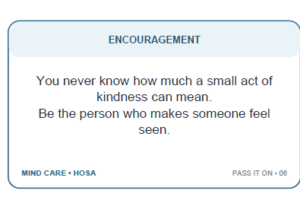
Pass Along Cards – Mind Care Diagnosis;Hope
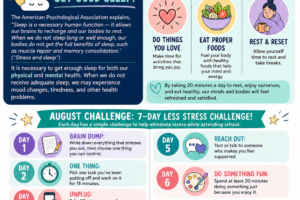
August 2026 – Ways To Manage School Stress